The Art of Material Selection: How to Choose the Right Materials for Your Interior in Riyadh
The Art of Material Selection for Interior Design and Fit-Out in Riyadh
Two spaces can share the same layout and feel completely different, and the difference is usually the materials. Wood, stone, fabric, metal and glass each change how a room looks, how long it lasts and how much it costs to maintain. This guide sets out the five criteria we use at Soroh Theqa to guide material selection for interior design and fit-out projects in Riyadh, followed by a comparison of common materials, our selection process, the mistakes to avoid and a checklist you can use before approving any sample.
1. Texture: Adds Depth and Character
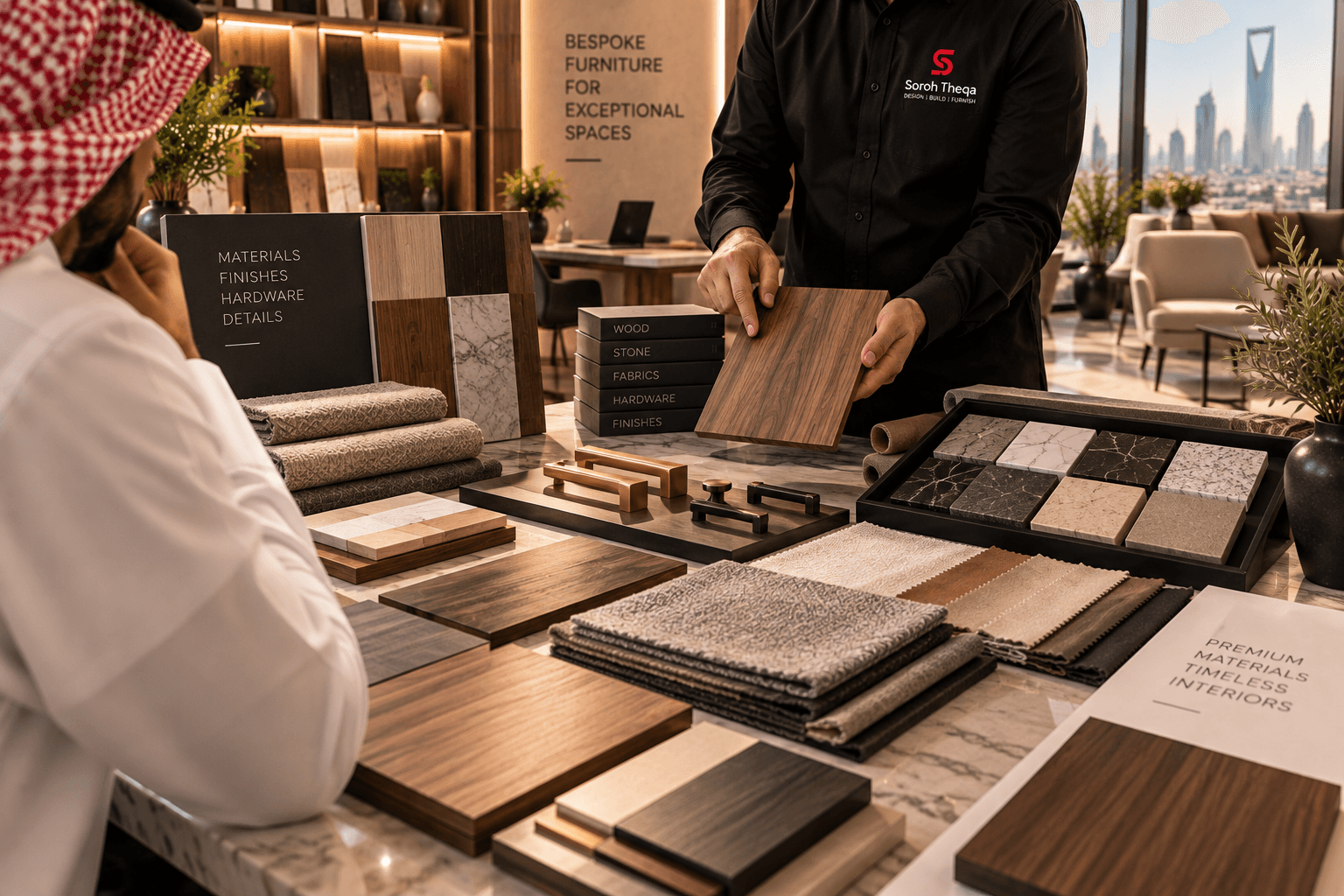
Texture is what people notice when they touch a space. Fluted wood panels, bouclé and woven fabrics, velvet, terrazzo and brushed metal each add warmth, softness or contrast, and they help a room feel layered rather than flat. In practice, combine two or three textures per room, balance smooth surfaces with rough ones, and test each sample by touch and under raking light, where texture shows most clearly.
2. Color: Creates Harmony and Mood
Warm neutrals such as beige, sand and walnut make a space calm and welcoming, while deep green, bronze or chocolate brown add richness and contrast. Choose a restrained palette and repeat it across floors, walls, joinery and furniture so the space reads as one design. Always review colors under the actual lighting, because daylight, warm LEDs and cool LEDs can change how the same sample looks.

3. Durability: Ensures Lasting Performance
Match each material to the traffic and conditions it will face. Reception areas, corridors and entrances need porcelain, engineered stone or commercial-grade finishes, while natural marble, soft wood and fabric panels suit lower-traffic areas. In Riyadh, also consider heat, dust and constant air conditioning, and ask suppliers for technical data, such as wear and slip ratings, and clear warranty terms.

4. Functionality: Fits the Purpose of the Space
Define what each space must do before you choose how it looks. A clinic needs seamless, easy-to-clean surfaces, an office benefits from sound-absorbing finishes, and a restaurant needs stain-resistant floors and seating. Confirm cleaning, acoustic, fire safety and maintenance requirements early. For healthcare spaces, see our clinic fit-out guide.

5. Aesthetics: Brings Your Design Vision to Life
The right materials make your brand identity visible. A premium showroom might combine marble, brass and fluted glass, while a modern office might use light oak, plaster and soft textiles. Build a material board that brings every selected finish together, so you can judge the whole composition before ordering and keep the design consistent from the entrance to the back of house.
Material Guide at a Glance
| Material | Best for | Strengths | Watch out for |
|---|---|---|---|
| Porcelain tile | Floors and walls in high-traffic areas | Very durable, stain resistant, easy to clean | Can feel cold if used alone; needs skilled installation |
| Engineered stone (quartz) | Counters, reception desks, wet areas | Consistent pattern, low maintenance | Heavy; edge detailing affects cost |
| Natural marble | Feature walls, lobbies, low-traffic floors | Premium look with unique veining | Can stain or scratch; needs sealing and care |
| Engineered wood and veneer | Wall paneling, joinery, flooring | Stable in dry climates, warm appearance | Check edge sealing and adhesive quality |
| Fluted wood or HPL panels | Feature walls, acoustic accents | Strong texture, good value, many finishes | Quality varies by core material and finish |
| Brushed brass and stainless steel | Trims, handles, signage, accents | Premium accent, long lasting | Shows fingerprints; use as an accent, not a main surface |
| Fabric and acoustic panels | Offices, meeting rooms, lounges | Absorb sound, soft feel | Choose cleanable, fire-rated fabrics |
| Reeded or tempered glass | Partitions, doors, balustrades | Light and privacy, modern look | Needs a safety rating and careful detailing |
Final suitability depends on the specific product, the supplier specification and the quality of installation.
Our Four-Step Material Selection Process
1. Brief and budget: define the use of each space, expected traffic, brand style, budget range and handover date. For budgeting guidance, see our office fit-out cost guide.
2. Shortlist: select three to five main materials per space, with alternatives at different price points.
3. Samples and material board: review physical samples under the actual lighting and approve a single board.
4. Specification and procurement: confirm quantities, lead times and warranties in the drawings and BOQ (see our technical drawings and BOQ guide), then check delivered batches against the approved samples.

Common Material Selection Mistakes to Avoid
• Choosing from photos or screens only, without physical samples.
• Using delicate finishes in high-traffic areas.
• Ignoring lead times for imported materials, which can delay handover.
• Mixing too many materials and colors in one space.
• Skipping technical data such as fire rating, slip resistance and warranty.
• Approving samples but not checking delivered batches against them.

Quick Checklist Before You Approve Any Material
• Is it suitable for the traffic level of this area?
• Is it available locally, with a clear lead time?
• Is it easy to clean and repair?
• Does it meet fire safety and local code requirements?
• Have you seen the physical sample under the lighting of the actual space?

Planning an interior design or fit-out project in Riyadh?
Contact Soroh Theqa to discuss your requirements for material selection, design and execution, from concept to handover.
FAQ
Frequently Asked Questions
Porcelain tiles, engineered stone and commercial-grade vinyl or carpet tiles are common choices because they resist wear and are easy to maintain. The final choice depends on budget, look and acoustic needs.
It can be, with care. Dry air and temperature changes can cause solid wood to move or crack, so engineered wood, veneer or high-pressure laminate finishes are often more stable. Ask the supplier for technical data and warranty terms.
Three to five main materials repeated across the space usually keep the design consistent, for example one wood, one stone or tile, one metal accent and one fabric.
Yes. Colors and textures look different under real lighting and next to other finishes, so approve samples and a material board before ordering.
Ideally during the design stage, before technical drawings and the BOQ are finalized, because material choice affects dimensions, services, cost and lead time. Late selection is a common cause of delay.
Yes. Materials are often a significant part of the cost, together with labor and services. Quotes can only be compared reliably when every contractor prices the same specification and quantities.